As the global demand for renewable energy continues to grow, 태양광 패널 장착 systems have become one of the most important components of every photovoltaic installation. Whether for residential rooftops, commercial buildings, industrial facilities, or utility-scale solar farms, selecting the right 태양광 패널 장착 solution directly affects system safety, durability, installation efficiency, and long-term power generation.
In 2026, the solar industry is evolving rapidly with larger photovoltaic modules, stricter building regulations, and increasing demand for customized mounting solutions. This comprehensive guide explains everything you need to know about 태양광 패널 장착, including system types, materials, selection criteria, industry trends, and how to choose a reliable manufacturing partner.
What Is Solar Panel Mounting?
태양광 패널 장착 refers to the structural framework used to securely install photovoltaic (PV) panels onto rooftops, the ground, carports, agricultural land, or other supporting surfaces. A high-quality 태양광 패널 장착 system provides mechanical stability while ensuring that solar panels remain at the optimal angle for maximum energy production.
Unlike solar panels themselves, mounting systems must withstand environmental challenges such as:
- Strong winds
- Heavy snow loads
- Rain and humidity
- Salt spray in coastal regions
- Earthquakes
- Extreme temperature fluctuations
- UV exposure
A professionally designed 태양광 패널 장착 solution ensures the entire solar power system can operate safely for over 25 years with minimal maintenance.
Why Solar Panel Mounting Matters
Many people focus only on the efficiency of photovoltaic modules, but the supporting structure is equally important. Investing in premium 태양광 패널 장착 provides several advantages:
Improved Structural Safety
Proper engineering ensures the mounting system complies with local building codes and resists wind uplift, snow pressure, and seismic forces.
Higher Energy Output
Correct tilt angles and orientation maximize sunlight exposure throughout the year, increasing electricity generation.
Faster Installation
Modern modular 태양광 패널 장착 systems feature pre-assembled components, reducing labor costs and installation time.
Long Service Life
Corrosion-resistant materials such as anodized aluminum and hot-dip galvanized steel significantly extend the lifespan of mounting structures.
Lower Maintenance Costs
신뢰성 태양광 패널 장착 minimizes component failures and reduces maintenance requirements throughout the project’s lifetime.
Main Types of Solar Panel Mounting Systems
Different projects require different mounting solutions. Understanding each type helps ensure the best investment.
지상 태양광 설치
Ground-mounted systems are ideal for:
- Utility-scale solar farms
- Agricultural projects
- Large commercial facilities
- Open land installations
Benefits include:
- Flexible orientation
- Easy maintenance
- Better ventilation
- Higher energy efficiency
- Scalability
Ground systems may use concrete foundations, driven piles, or ground screws depending on soil conditions.
Flat Roof Solar Panel Mounting
Flat commercial roofs commonly utilize ballasted or mechanically attached 태양광 패널 장착 systems.
Advantages include:
- No roof penetration options
- Quick installation
- Adjustable tilt angles
- Reduced roof maintenance
Ballasted systems are particularly popular because they protect roof waterproofing while simplifying installation.
Metal Roof Solar Panel Mounting
Standing seam and corrugated metal roofs require specialized clamps and rails.
Benefits include:
- Minimal roof penetration
- Excellent waterproof performance
- High structural strength
- Simple installation
Specialized rail systems can significantly reduce installation time.
Tile Roof Solar Panel Mounting
Residential projects frequently require tile roof mounting systems.
These systems typically use:
- Roof hooks
- Aluminum rails
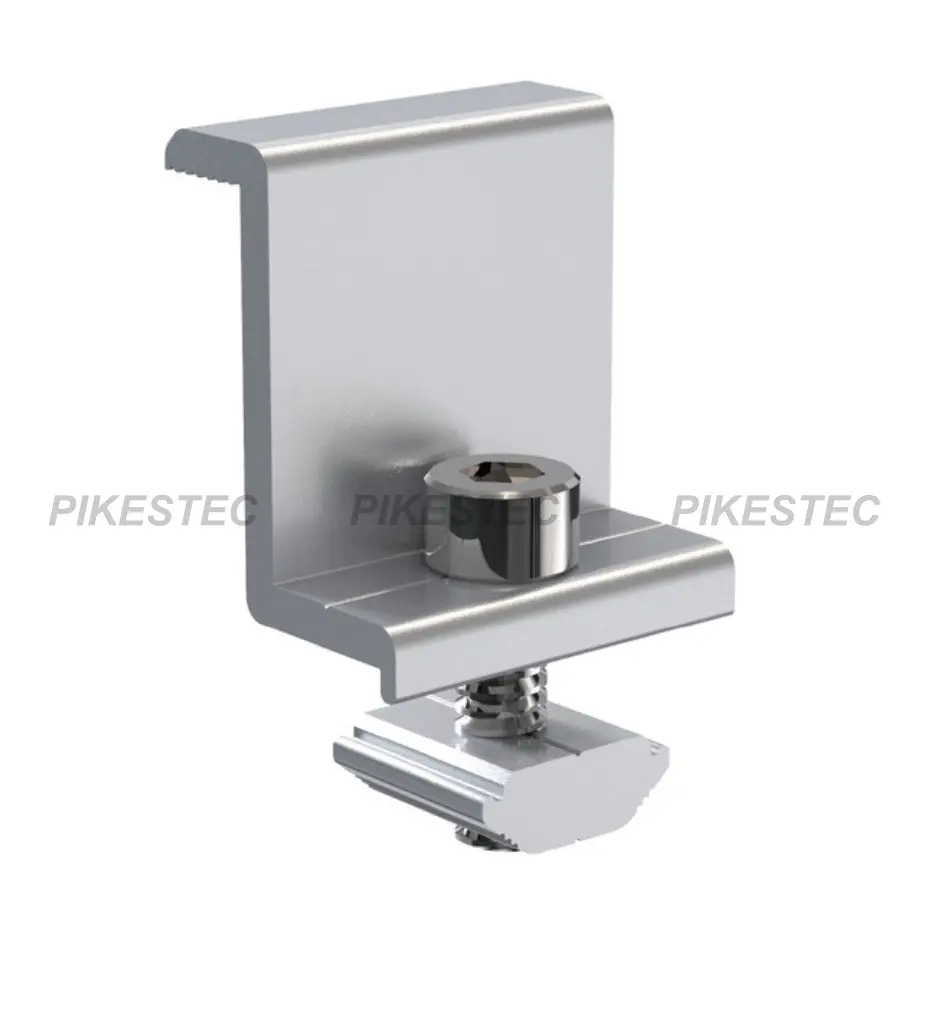
- Mid clamps
- End clamps
Proper engineering prevents roof leakage while maintaining structural integrity.
Solar Carport Mounting
Solar carports combine parking facilities with renewable energy generation.
Advantages include:
- Dual land utilization
- Electric vehicle charging integration
- Commercial branding opportunities
- Weather protection
Solar carports are increasingly popular in shopping centers, office parks, schools, and industrial facilities.
Materials Used in Solar Panel Mounting
Material selection greatly affects durability, installation cost, and maintenance.
Aluminum Alloy
Aluminum has become the preferred material for many 태양광 패널 장착 systems because it offers:
- Lightweight construction
- Excellent corrosion resistance
- Easy transportation
- Fast installation
- Long lifespan
Anodized aluminum performs especially well in coastal environments.
Hot-Dip Galvanized Steel
Steel provides superior structural strength.
Advantages include:
- High load-bearing capacity
- Cost-effectiveness
- Excellent wind resistance
- Suitable for utility-scale projects
Many ground mounting systems combine steel foundations with aluminum rails.
Stainless Steel Components
Bolts, nuts, washers, and fasteners are usually manufactured from stainless steel to prevent corrosion throughout decades of outdoor exposure.
Key Factors When Choosing Solar Panel Mounting
Selecting the right 태양광 패널 장착 system requires careful consideration of multiple factors.
Local Climate
Projects located in snowy regions require stronger structures.
High-wind coastal installations require enhanced wind resistance.
Earthquake-prone areas require seismic engineering.
Roof Type
Different roofs require different mounting solutions.
Common roof types include:
- Standing seam metal roofs
- Corrugated metal roofs
- Flat concrete roofs
- Asphalt shingles
- Clay tiles
- Concrete tiles
Choosing compatible mounting hardware prevents roof damage.
Solar Module Size
Today’s photovoltaic panels are significantly larger than previous generations.
Larger modules require:
- Stronger rails
- Improved clamp design
- Optimized load distribution
- Enhanced structural calculations
Modern 태양광 패널 장착 systems are specifically designed for high-power modules exceeding 600W.
Installation Efficiency
Contractors increasingly prefer modular systems featuring:
- Pre-assembled components
- Universal connectors
- Quick-lock clamps
- Reduced hardware
These features reduce installation time by up to 40%.
Industry Trends in Solar Panel Mounting for 2026
그리고 태양광 패널 장착 industry continues to evolve alongside advancements in photovoltaic technology.
Lightweight Structures
Manufacturers are reducing structural weight while maintaining strength, lowering transportation costs and simplifying installation.
Corrosion-Resistant Materials
Advanced coatings, anodized aluminum, and zinc-aluminum-magnesium steel are replacing conventional galvanized materials.
These innovations extend product life in harsh environments.
Larger PV Modules
As solar panel dimensions continue increasing, mounting systems are adapting with:
- Wider rail spacing
- Improved clamps
- Higher structural capacity
- Optimized wind-load performance
Faster Installation Systems
Manufacturers are developing tool-free connections and pre-assembled components that dramatically improve installation speed.
Customized Engineering
Every project presents unique structural requirements.
Demand for custom Solar Panel Mounting solutions continues growing, particularly for:
- Commercial rooftops
- Industrial buildings
- Solar carports
- Agricultural PV
- Floating solar projects
Customized engineering improves both safety and return on investment.
Importance of Choosing a Professional Solar Panel Mounting Manufacturer
Selecting an experienced Solar Panel Mounting manufacturer is essential for project success.
Professional manufacturers provide:
- Engineering support
- Structural calculations
- Wind load analysis
- Snow load analysis
- Customized design
- Product certifications
- Quality control
- Long-term warranties
An experienced Solar Panel Mounting manufacturer understands regional building codes and international standards, ensuring reliable performance throughout the project’s lifespan.
Why Work with an Experienced Solar Panel Mounting Supplier?
A trusted Solar Panel Mounting supplier offers far more than standard products.
Reliable suppliers provide:
- Fast quotations
- Global logistics
- Technical consultation
- OEM services
- ODM development
- Flexible production capacity
- Inventory management
- After-sales support
Working with a professional Solar Panel Mounting supplier helps reduce procurement risks while ensuring timely project delivery.
Advantages of Working with a Modern Solar Panel Mounting Factory
An advanced Solar Panel Mounting factory integrates automated manufacturing with strict quality management.
Modern factories typically feature:
- CNC machining
- Automated punching
- Aluminum extrusion production
- Robotic welding
- Precision cutting
- Surface treatment facilities
- Quality inspection laboratories
A well-equipped Solar Panel Mounting factory maintains consistent product quality while supporting large-volume international projects.
Benefits of Custom Solar Panel Mounting Solutions
Every solar project is unique.
Therefore, many EPC companies and distributors increasingly request custom Solar Panel Mounting systems tailored to specific requirements.
Customization options include:
- Rail dimensions
- Material selection
- Surface treatments
- Roof compatibility
- Foundation types
- Wind-load requirements
- Snow-load ratings
- Packaging solutions
- Branding
- OEM labeling
Professional engineering teams can develop custom Solar Panel Mounting solutions that reduce installation costs while maximizing structural reliability.
OEM and ODM Services for Global Partners
Leading manufacturers now provide complete OEM and ODM services.
OEM services typically include:
- Customer branding
- Private labeling
- Customized packaging
- Technical documentation
ODM services include:
- Product development
- Structural optimization
- Prototype production
- Engineering verification
- Mass production
These services help distributors, wholesalers, EPC contractors, and solar brands expand their product portfolios without investing in manufacturing facilities.
Future Outlook for Solar Panel Mounting
The future of 태양광 패널 장착 is closely tied to the rapid growth of the global renewable energy market.
Key developments expected over the coming years include:
- Smarter mounting system designs
- AI-assisted structural optimization
- More recyclable materials
- Lower-carbon manufacturing processes
- Increased automation
- Faster installation technologies
- Higher compatibility with next-generation photovoltaic modules
As governments continue promoting clean energy and carbon neutrality, demand for reliable and efficient 태양광 패널 장착 systems will continue to rise across residential, commercial, and utility-scale applications.
결론
Choosing the right 태양광 패널 장착 system is one of the most important decisions in any solar project. A well-designed mounting structure enhances safety, improves energy production, reduces installation time, and extends the service life of the entire photovoltaic system.
Whether your project involves rooftop installations, ground-mounted solar farms, commercial carports, or customized engineering solutions, partnering with an experienced Solar Panel Mounting manufacturer, dependable Solar Panel Mounting supplier, and technologically advanced Solar Panel Mounting factory ensures long-term project success.
As the industry moves toward larger solar modules, higher efficiency, and increasingly complex installations, investing in high-quality custom Solar Panel Mounting solutions will provide greater reliability, lower lifecycle costs, and stronger returns on investment. By selecting the right partner and the right mounting technology, businesses can confidently build solar energy systems that deliver exceptional performance for decades to come.